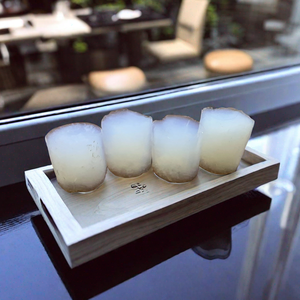
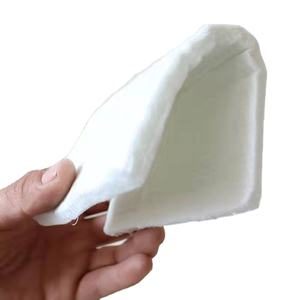
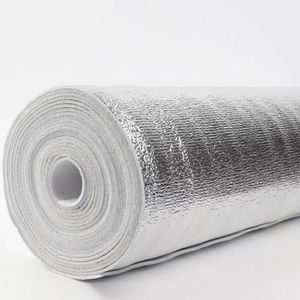
Overview of Silica Aerogel Thermal Insulation blanket/film
Aerogels are ultralight, highly porous materials known for their exceptional insulation properties, remarkable low density, and incredible strength-to-weight ratios. Ofte omtalt som “frossen røg” due to their ethereal appearance, aerogels are produced by replacing the liquid component of a gel with gas, typically through supercritical drying, which avoids collapse of the gel structure. Composed primarily of air (up to 99.98%), these materials exhibit a wide array of unique characteristics that make them valuable across various industries.
Features of Silica Aerogel Thermal Insulation blanket/film
-
Ekstremt lav densitet: Aerogels are some of the world’s lightest solids, with densities as low as 0.001 grams per cubic centimeter.
-
Superb Insulation: They possess extremely low thermal conductivity, making them among the best insulators known to man, effective at temperatures from -270°C to 1,000°C.
-
High Porosity: With a porous structure that can reach up to 99.9%, aerogels have an incredibly large internal surface area, enhancing their functionality in absorption and catalysis applications.
-
Translucent to Transparent: Depending on their composition, aerogels can transmit light, giving them a unique semi-transparent or transparent appearance.
-
Mechanical Strength: Despite their fragile appearance, aerogels can be engineered to possess significant mechanical strength, capable of bearing considerable weight.
-
Kemisk inert: Many aerogels are chemically stable and resistant to corrosion, making them suitable for harsh environments.
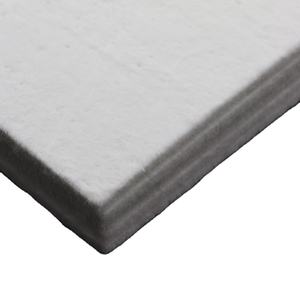
( Silica Aerogel Thermal Insulation blanket/film)
Parameters of Silica Aerogel Thermal Insulation blanket/film
Silica Aerogel thermal insulation blanket/film parameters are important in determining the performance of your thermal insulation system. These parameters include the amount and type of fiber used, the temperature range for application, and other factors such as layout and orientation.
The first step is to determine the desired thermal performance of your thermal insulation system. This will depend on the specific requirements of your application, including the materials being used, the intended use case, and the level of efficiency you require.
Once you have determined the necessary thermal performance parameters, you can begin to specify the fiber used in your system. Common types of fiber used in thermal insulation systems include (PE), ethylene-vinyl alcohol (EVA), and reinforcing sisal. Each fiber has its own unique properties that affect its ability to retain heat, and choosing the right fiber will depend on the specific application and conditions.
Once you have chosen the appropriate fiber, you will need to determine the temperature range for application. Different types of fibers will perform differently under different temperatures, so it’s important to choose one that meets your application’s specific requirements.
After determining the temperature range, you will need to calculate the total thermal loss due to absorption and loss of heat by the system. This will be done using appropriate methods, such as measuring and recording temperature changes over time or using specialized equipment.
In addition to the temperature range and other technical specifications, it’s also important to consider the layout and orientation of your thermal insulation system. The size, shape, and placement of the fiber used in your system will affect how effectively it retains heat and prevent convection and diffusion. It’s important to design your thermal insulation system to meet the needs of all users and provide optimal performance at different operating temperatures.
Samlet set, the selection of the required thermal insulation parameters requires careful consideration of your specific application and requirements. By following these steps, you can ensure that your thermal insulation system provides optimal performance and meets your overall needs.
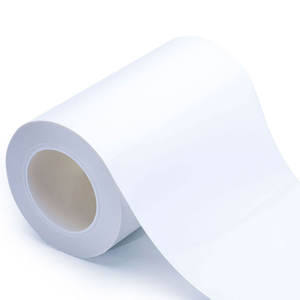
( Silica Aerogel Thermal Insulation blanket/film)
Applications of Silica Aerogel Thermal Insulation blanket/film
-
Thermal Insulation: Used in aerospace for spacecraft insulation, and in commercial and residential buildings for energy-efficient windows and insulation materials.
-
Environmental Remediation: Aerogels’ high surface area makes them effective in absorbing pollutants like oil spills and heavy metals from water.
-
Sound Absorption: Their porous structure absorbs sound waves effectively, making them useful in noise reduction applications.
-
Elektronik: Aerogels’ low thermal conductivity and electrical insulation properties find applications in semiconductor and battery technology.
-
Optics and Photonics: Translucent aerogels are used in optical devices, light-guiding structures, and as filters.
-
Drug Delivery: The high surface area can be utilized for controlled drug release, making aerogels candidates for advanced medical applications.
Virksomhedsprofil
Graphne Aerogels er en betroet global leverandør af kemiske materialer & producent med over 12 års erfaring i at levere aerogel- og grafenprodukter af super høj kvalitet.
Virksomheden har en professionel teknisk afdeling og kvalitetstilsynsafdeling, et veludstyret laboratorium, og udstyret med avanceret testudstyr og eftersalgs kundeservicecenter.
Hvis du leder efter grafen af høj kvalitet, aerogel og relaterede produkter, Du er velkommen til at kontakte os eller klikke på de nødvendige produkter for at sende en forespørgsel.
Betalingsmetoder
L/C, T/T, Western Union, Paypal, Kreditkort osv.
Forsendelse
Det kunne sendes ad søvejen, med fly, eller ved at afsløre ASAP så snart tilbagebetalingen er modtaget.
FAQs of Silica Aerogel Thermal Insulation blanket/film
Q: Is Silica Aerogel Thermal Insulation blanket/film fragile?
EN: Traditional aerogels are brittle and fragile; however, advancements have led to the development of “flexible” or “rigid” aerogels that maintain their unique properties while being more durable.
Q: How is Silica Aerogel Thermal Insulation blanket/film made?
EN: Silica Aerogel Thermal Insulation blanket/film is synthesized by replacing the liquid in a gel with gas without causing the structure to collapse. This is typically achieved through supercritical drying, where the solvent is converted to a supercritical state, allowing it to evaporate without forming liquid-gas interfaces that could damage the gel structure.
Q: Is Silica Aerogel Thermal Insulation blanket/film expensive?
EN: Historically, aerogels have been costly due to their complex manufacturing process. Imidlertid, with technological advancements and economies of scale, costs are gradually decreasing.
Q: Can Silica Aerogel Thermal Insulation blanket/film conduct electricity?
EN: Most aerogels are poor conductors of electricity due to their porous, insulating nature. Imidlertid, certain metal-oxide aerogels can display semiconducting or even conducting properties.
Q: Is Silica Aerogel Thermal Insulation blanket/film environmentally friendly?
EN: Aerogels themselves do not pose environmental hazards, and their use in insulation can reduce energy consumption. Imidlertid, the production process may involve chemicals that require careful handling and disposal.
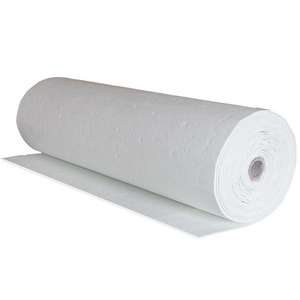
( Silica Aerogel Thermal Insulation blanket/film)