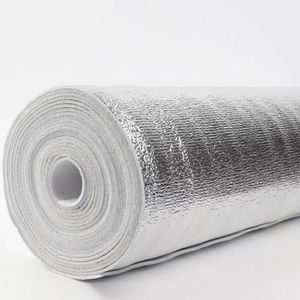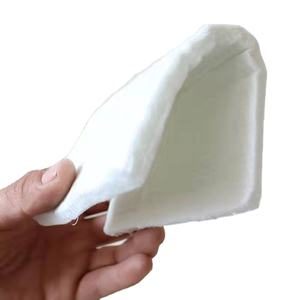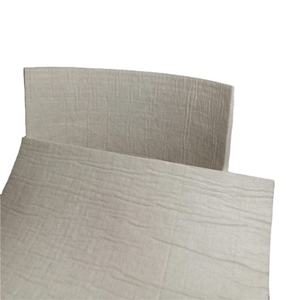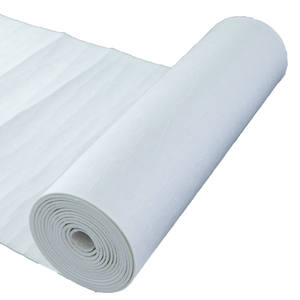
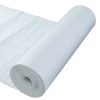
Overview of Aerogel sheet
Aerogele sind ultraleicht, hochporöse Materialien, die für ihre außergewöhnlichen Isoliereigenschaften bekannt sind, bemerkenswert niedrige Dichte, und ein unglaubliches Verhältnis von Festigkeit zu Gewicht. Wird oft als bezeichnet “gefrorener Rauch” aufgrund ihrer ätherischen Erscheinung, Aerogele werden hergestellt, indem die flüssige Komponente eines Gels durch Gas ersetzt wird, typischerweise durch überkritisches Trocknen, wodurch ein Zusammenbruch der Gelstruktur vermieden wird. Besteht hauptsächlich aus Luft (bis zu 99.98%), Diese Materialien weisen eine Vielzahl einzigartiger Eigenschaften auf, die sie für verschiedene Branchen wertvoll machen.
Features of Aerogel sheet
-
Extrem niedrige Dichte: Aerogele gehören zu den leichtesten Feststoffen der Welt, mit Dichten so niedrig wie 0.001 Gramm pro Kubikzentimeter.
-
Hervorragende Isolierung: Sie besitzen eine extrem niedrige Wärmeleitfähigkeit, Damit gehören sie zu den besten Isolatoren, die der Mensch kennt, wirksam bei Temperaturen von -270 °C bis 1.000 °C.
-
Hohe Porosität: Mit einer porösen Struktur, die bis zu reichen kann 99.9%, Aerogele haben eine unglaublich große innere Oberfläche, Verbesserung ihrer Funktionalität in Absorptions- und Katalyseanwendungen.
-
Durchscheinend bis transparent: Abhängig von ihrer Zusammensetzung, Aerogele können Licht durchlassen, was ihnen ein einzigartiges halbtransparentes oder transparentes Aussehen verleiht.
-
Mechanische Festigkeit: Trotz ihres fragilen Aussehens, Aerogele können so konstruiert werden, dass sie eine erhebliche mechanische Festigkeit aufweisen, in der Lage, ein beträchtliches Gewicht zu tragen.
-
Chemisch inert: Viele Aerogele sind chemisch stabil und korrosionsbeständig, Dadurch sind sie für raue Umgebungen geeignet.

(Aerogel-Blatt)
Parameters of Aerogel sheet
Aerogel sheet parameters refers to the values of various aspects that influence the surface properties and performance of an aerogel sheet such as its surface roughness, flexural strain, erosion resistance, usw. These parameters can be obtained by taking into account various factors such as the type of aerogel, the surface conditions (e.g., temperature, humidity), and the strength and distribution of stress on the sheet. The values of these parameters can be used to optimize the surface design for specific applications such as aerospace structures, biomedical devices, or industrial processes.
One common approach to determining aerogel sheet parameters is through a simulation method. This involves creating a physical model of the aerogel sheet and calculating its properties based on simulation data. Zum Beispiel, the material’s density, refractive index, and composition can be used to calculate the surface roughness and flexural strain. Similarly, the resistance to deformation, shear strength, and tensile strength can be calculated using statistical models.
Another method to determine aerogel sheet parameters is through physical testing. This involves measuring the aerogel sheet under different conditions, such as pressure, temperature, and humidity. The results can then be used to refine the sheet’s parameters by adjusting their values until the desired surface properties are achieved.
In addition to numerical methods, there are also experimental techniques that can be used to determine aerogel sheet parameters. Zum Beispiel, using optical means to observe the characteristics of the aerogel sheet under different conditions can provide valuable information about its properties. Zusätzlich, studying the interplay between various aerogel sheet parameters can help guide the design process and improve the efficiency and performance of the final product.
Gesamt, aerogel sheet parameters play a crucial role in determining its properties and performance. By understanding these parameters, manufacturers can design aircrafts, biomedical devices, and other applications with optimized aerogels.

(Aerogel-Blatt)
Applications of Aerogel sheet
-
Thermal Insulation: Used in aerospace for spacecraft insulation, and in commercial and residential buildings for energy-efficient windows and insulation materials.
-
Environmental Remediation: Aerogels’ high surface area makes them effective in absorbing pollutants like oil spills and heavy metals from water.
-
Sound Absorption: Their porous structure absorbs sound waves effectively, making them useful in noise reduction applications.
-
Elektronik: Aerogels’ low thermal conductivity and electrical insulation properties find applications in semiconductor and battery technology.
-
Optics and Photonics: Translucent aerogels are used in optical devices, light-guiding structures, and as filters.
-
Drug Delivery: The high surface area can be utilized for controlled drug release, making aerogels candidates for advanced medical applications.
Unternehmensprofil
Graphne Aerogels ist ein vertrauenswürdiger globaler Lieferant chemischer Materialien & Hersteller mit über 12 Jahren Erfahrung in der Bereitstellung hochwertiger Aerogel- und Graphenprodukte.
Das Unternehmen verfügt über eine professionelle technische Abteilung und eine Abteilung für Qualitätsüberwachung, ein gut ausgestattetes Labor, und ausgestattet mit fortschrittlicher Testausrüstung und einem Kundendienstzentrum nach dem Verkauf.
Wenn Sie auf der Suche nach hochwertigem Graphen sind, Aerogel und verwandte Produkte, Bitte kontaktieren Sie uns oder klicken Sie auf die gewünschten Produkte, um eine Anfrage zu senden.
Zahlungsmethoden
L/C, T/T, Western Union, Paypal, Kreditkarte usw.
Lieferung
Es könnte auf dem Seeweg verschifft werden, auf dem Luftweg, oder per Benachrichtigung so schnell wie möglich nach Erhalt der Rückzahlung.
FAQs of Aerogel sheet
Q: Is Aerogel sheet fragile?
A: Traditional aerogels are brittle and fragile; however, advancements have led to the development of “flexible” or “rigid” aerogels that maintain their unique properties while being more durable.
Q: How is Aerogel sheet made?
A: Aerogel sheet is synthesized by replacing the liquid in a gel with gas without causing the structure to collapse. This is typically achieved through supercritical drying, where the solvent is converted to a supercritical state, allowing it to evaporate without forming liquid-gas interfaces that could damage the gel structure.
Q: Is Aerogel sheet expensive?
A: Historically, aerogels have been costly due to their complex manufacturing process. Jedoch, with technological advancements and economies of scale, costs are gradually decreasing.
Q: Can Aerogel sheet conduct electricity?
A: Most aerogels are poor conductors of electricity due to their porous, insulating nature. Jedoch, certain metal-oxide aerogels can display semiconducting or even conducting properties.
Q: Is Aerogel sheet environmentally friendly?
A: Aerogels themselves do not pose environmental hazards, and their use in insulation can reduce energy consumption. Jedoch, the production process may involve chemicals that require careful handling and disposal.

(Aerogel-Blatt)