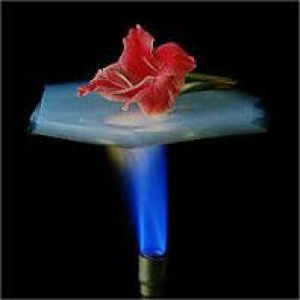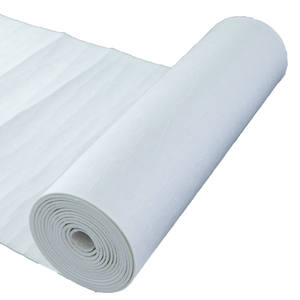
Overview of Aerogel sheet
Les aérogels sont ultralégers, matériaux très poreux reconnus pour leurs propriétés isolantes exceptionnelles, densité remarquablement faible, et des rapports résistance/poids incroyables. Souvent appelé “fumée gelée” en raison de leur apparence éthérée, les aérogels sont produits en remplaçant le composant liquide d'un gel par du gaz, généralement par séchage supercritique, ce qui évite l'effondrement de la structure du gel. Composé principalement d'air (jusqu'à 99.98%), ces matériaux présentent un large éventail de caractéristiques uniques qui les rendent précieux dans diverses industries.
Features of Aerogel sheet
-
Densité extrêmement faible: Les aérogels font partie des solides les plus légers au monde, avec des densités aussi faibles que 0.001 grammes par centimètre cube.
-
Superbe isolation: Ils possèdent une conductivité thermique extrêmement faible, ce qui en fait l'un des meilleurs isolants connus de l'homme, efficace à des températures de -270°C à 1 000°C.
-
Porosité élevée: Avec une structure poreuse pouvant atteindre jusqu'à 99.9%, les aérogels ont une surface interne incroyablement grande, améliorant leur fonctionnalité dans les applications d'absorption et de catalyse.
-
Translucide à Transparent: Selon leur composition, les aérogels peuvent transmettre la lumière, leur donnant un aspect semi-transparent ou transparent unique.
-
Résistance mécanique: Malgré leur apparence fragile, les aérogels peuvent être conçus pour posséder une résistance mécanique significative, capable de supporter un poids considérable.
-
Chimiquement inerte: De nombreux aérogels sont chimiquement stables et résistants à la corrosion, ce qui les rend adaptés aux environnements difficiles.

(Aerogel sheet)
Parameters of Aerogel sheet
Aerogel sheet parameters refers to the values of various aspects that influence the surface properties and performance of an aerogel sheet such as its surface roughness, flexural strain, erosion resistance, etc.. These parameters can be obtained by taking into account various factors such as the type of aerogel, the surface conditions (e.g., temperature, humidity), and the strength and distribution of stress on the sheet. The values of these parameters can be used to optimize the surface design for specific applications such as aerospace structures, biomedical devices, or industrial processes.
One common approach to determining aerogel sheet parameters is through a simulation method. This involves creating a physical model of the aerogel sheet and calculating its properties based on simulation data. Par exemple, the material’s density, refractive index, and composition can be used to calculate the surface roughness and flexural strain. Similarly, the resistance to deformation, shear strength, and tensile strength can be calculated using statistical models.
Another method to determine aerogel sheet parameters is through physical testing. This involves measuring the aerogel sheet under different conditions, such as pressure, temperature, and humidity. The results can then be used to refine the sheet’s parameters by adjusting their values until the desired surface properties are achieved.
In addition to numerical methods, there are also experimental techniques that can be used to determine aerogel sheet parameters. Par exemple, using optical means to observe the characteristics of the aerogel sheet under different conditions can provide valuable information about its properties. En plus, studying the interplay between various aerogel sheet parameters can help guide the design process and improve the efficiency and performance of the final product.
Dans l'ensemble, aerogel sheet parameters play a crucial role in determining its properties and performance. By understanding these parameters, manufacturers can design aircrafts, biomedical devices, and other applications with optimized aerogels.

(Aerogel sheet)
Applications of Aerogel sheet
-
Thermal Insulation: Used in aerospace for spacecraft insulation, and in commercial and residential buildings for energy-efficient windows and insulation materials.
-
Environmental Remediation: Aerogels’ high surface area makes them effective in absorbing pollutants like oil spills and heavy metals from water.
-
Sound Absorption: Their porous structure absorbs sound waves effectively, making them useful in noise reduction applications.
-
Électronique: Aerogels’ low thermal conductivity and electrical insulation properties find applications in semiconductor and battery technology.
-
Optics and Photonics: Translucent aerogels are used in optical devices, light-guiding structures, and as filters.
-
Drug Delivery: The high surface area can be utilized for controlled drug release, making aerogels candidates for advanced medical applications.
Profil de l'entreprise
Graphne Aerogels est un fournisseur mondial de matériaux chimiques de confiance & fabricant avec plus de 12 ans d'expérience dans la fourniture de produits d'aérogel et de graphène de très haute qualité.
L'entreprise dispose d'un département technique professionnel et d'un département de supervision de la qualité., un laboratoire bien équipé, et équipé d'un équipement de test avancé et d'un centre de service client après-vente.
Si vous recherchez du graphène de haute qualité, aérogel et produits associés, n'hésitez pas à nous contacter ou à cliquer sur les produits nécessaires pour envoyer une demande.
Méthodes de paiement
L/C, T/T, Western union, Paypal, Carte de crédit, etc..
Expédition
Il pourrait être expédié par voie maritime, par avion, ou en le révélant au plus vite dès réception du remboursement.
FAQs of Aerogel sheet
Q: Is Aerogel sheet fragile?
UN: Traditional aerogels are brittle and fragile; cependant, advancements have led to the development of “flexible” ou “rigid” aerogels that maintain their unique properties while being more durable.
Q: How is Aerogel sheet made?
UN: Aerogel sheet is synthesized by replacing the liquid in a gel with gas without causing the structure to collapse. This is typically achieved through supercritical drying, where the solvent is converted to a supercritical state, allowing it to evaporate without forming liquid-gas interfaces that could damage the gel structure.
Q: Is Aerogel sheet expensive?
UN: Historically, aerogels have been costly due to their complex manufacturing process. Cependant, with technological advancements and economies of scale, costs are gradually decreasing.
Q: Can Aerogel sheet conduct electricity?
UN: Most aerogels are poor conductors of electricity due to their porous, insulating nature. Cependant, certain metal-oxide aerogels can display semiconducting or even conducting properties.
Q: Is Aerogel sheet environmentally friendly?
UN: Aerogels themselves do not pose environmental hazards, and their use in insulation can reduce energy consumption. Cependant, the production process may involve chemicals that require careful handling and disposal.

(Aerogel sheet)