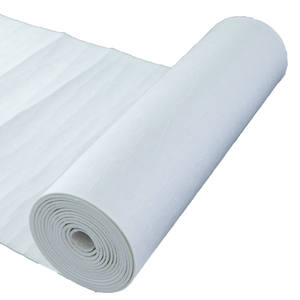
Overview of Aerogel sheet
le aerogeles jach ligeros, materiales jach porosos k'ajóolta'ano'ob tumen u propiedades aislamiento excepcionales, notable baja densidad, yéetel increíbles relación muuk'-peso. Ya'ab u téenel ku ya'ala'al ti' “buuts' congelado” tumen u yila'al etéreo, le aerogeles ku beeta'al tumen u k'e'exel le componente líquido ti' jump'éel gel yéetel gas, típicamente yo'osal u secado supercrítico, ku evitar u colapso le ba'ax gel. Compuesto chuunil laat'a'an yéetel iik' (tak 99.98%), these materials exhibit a wide array of unique characteristics that make them valuable across various industries.
Features of Aerogel sheet
-
Extremely Low Density: Aerogels are some of the world’s lightest solids, with densities as low as 0.001 grams per cubic centimeter.
-
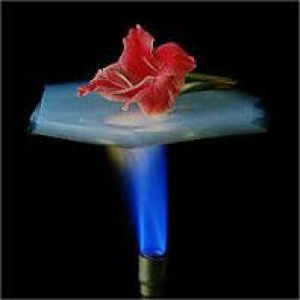
Superb Insulation: They possess extremely low thermal conductivity, making them among the best insulators known to man, effective at temperatures from -270°C to 1,000°C.
-
High Porosity: With a porous structure that can reach up to 99.9%, aerogels have an incredibly large internal surface area, enhancing their functionality in absorption and catalysis applications.
-
Translucent to Transparent: Depending on their composition, aerogels can transmit light, giving them a unique semi-transparent or transparent appearance.
-
Mechanical Strength: Despite their fragile appearance, aerogels can be engineered to possess significant mechanical strength, capable of bearing considerable weight.
-
Químicamente inerte: Many aerogels are chemically stable and resistant to corrosion, making them suitable for harsh environments.

(Aerogel sheet)
Parameters of Aerogel sheet
Aerogel sheet parameters refers to the values of various aspects that influence the surface properties and performance of an aerogel sheet such as its surface roughness, flexural strain, erosion resistance, etc. These parameters can be obtained by taking into account various factors such as the type of aerogel, the surface conditions (e.g., temperature, humidity), and the strength and distribution of stress on the sheet. The values of these parameters can be used to optimize the surface design for specific applications such as aerospace structures, biomedical devices, or industrial processes.
One common approach to determining aerogel sheet parameters is through a simulation method. This involves creating a physical model of the aerogel sheet and calculating its properties based on simulation data. jéel bix, the material’s density, refractive index, and composition can be used to calculate the surface roughness and flexural strain. Similarly, the resistance to deformation, shear strength, and tensile strength can be calculated using statistical models.
Another method to determine aerogel sheet parameters is through physical testing. This involves measuring the aerogel sheet under different conditions, such as pressure, temperature, and humidity. The results can then be used to refine the sheet’s parameters by adjusting their values until the desired surface properties are achieved.
In addition to numerical methods, there are also experimental techniques that can be used to determine aerogel sheet parameters. jéel bix, using optical means to observe the characteristics of the aerogel sheet under different conditions can provide valuable information about its properties. Beyxan, studying the interplay between various aerogel sheet parameters can help guide the design process and improve the efficiency and performance of the final product.
Jéeneral, aerogel sheet parameters play a crucial role in determining its properties and performance. By understanding these parameters, manufacturers can design aircrafts, biomedical devices, and other applications with optimized aerogels.

(Aerogel sheet)
Applications of Aerogel sheet
-
Aislamiento térmico: Meyajtiko'ob ti' le aeroespacial uti'al u aislamiento le nave espacial, yéetel ti' edificios comerciales yéetel residenciales utia'al u ventanas eficientes ti' energía yéetel materiales aislamiento.
-
Remediación Ambiental: Aerogeles’ ka'anal superficie ku beetik u yantal u muuk' ti' le absorción contaminantes bey derrames petróleo yéetel metales aalo'ob ti' le ja'o'.
-
Absorción u juum: U ba'ax porosa ku chu'uchik yéetel eficacia le ondas sonoras, beetik u útiles ti' aplicaciones reducción juum.
-
Electrónica: Aerogeles’ low thermal conductivity and electrical insulation properties find applications in semiconductor and battery technology.
-
Optics and Photonics: Translucent aerogels are used in optical devices, light-guiding structures, and as filters.
-
Drug Delivery: The high surface area can be utilized for controlled drug release, making aerogels candidates for advanced medical applications.
Perfil ti' le empresa
Graphne Aerogels jach jump'éel proveedor u xooko'obo' químico global u confiable & fabricante yéetel asab u 12 ja'abo'ob yaan ti' kaambalo'ob ti' le ts'aik yik'áalil aerogel yéetel grafeno super ka'anal calidad.
Le empresa yaan ti' jump'éel departamento técnico j-ka'ansajo'ob yéetel Departamento supervisión calidad, jump'éel laboratorio ma'alob nu'ukulo'ob, yéetel equipado yéetel nu'ukulil prueba avanzada yéetel chúumukil mayaj ti' le cliente post-venta.
Wa ka kaxtik grafeno ka'anal calidad, aerogel yéetel yik'áalil relativos, ma' dude ti' contactar k wa u beetik clic ti' le yik'áalil k'a'abeto'ob utia'al túuxtik jump'éel consulta.
Bix u bo'otik
L/C, T/T, Western Union, Paypal, Tarjeta de crédito etc.
Envío
je'el u páajtal u túuxta'al tumen k'áak'náab, tumen iik', wa tumen revelar ASAP uts séeb bey recibo u reembolso.
FAQs of Aerogel sheet
K: Is Aerogel sheet fragile?
JUNTÚUL: Traditional aerogels are brittle and fragile; however, advancements have led to the development of “flexible” or “rigid” aerogels that maintain their unique properties while being more durable.
K: How is Aerogel sheet made?
JUNTÚUL: Aerogel sheet is synthesized by replacing the liquid in a gel with gas without causing the structure to collapse. This is typically achieved through supercritical drying, where the solvent is converted to a supercritical state, allowing it to evaporate without forming liquid-gas interfaces that could damage the gel structure.
K: Is Aerogel sheet expensive?
JUNTÚUL: Historically, aerogels have been costly due to their complex manufacturing process. Chen ba'ale, with technological advancements and economies of scale, costs are gradually decreasing.
K: Can Aerogel sheet conduct electricity?
JUNTÚUL: Most aerogels are poor conductors of electricity due to their porous, insulating nature. Chen ba'ale, certain metal-oxide aerogels can display semiconducting or even conducting properties.
K: Is Aerogel sheet environmentally friendly?
JUNTÚUL: Aerogels themselves do not pose environmental hazards, and their use in insulation can reduce energy consumption. Chen ba'ale, the production process may involve chemicals that require careful handling and disposal.

(Aerogel sheet)