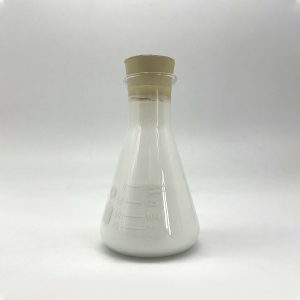
Overview of Aerogel Powder
Aerogel Powder is the world’s lightest solid material, captured in a versatile dry form. Often referred to as “sušalę dūmai” dėl savo eterinės išvaizdos, this nanoporous powder is derived from a gel in which the liquid component is replaced with gas, resulting in an extraordinary matrix of up to 99.8% air. This unique structure delivers exceptional thermal and acoustic properties in a highly adaptable format. As a raw material, it provides engineers, formulators, and researchers with the fundamental benefits of aerogel technology to incorporate into custom solutions, composites, and specialized systems.
Features of Aerogel Powder
Unmatched Thermal Performance: Possesses the lowest thermal conductivity of any known solid material, enabling superior insulation in extreme temperature environments.
Extreme Lightweight: Ultra-low density material that adds minimal weight to final products or composites.
High Surface Area: Features an incredibly porous nanostructure with a surface area ranging from 600–1000 m²/g, ideal for filtration, katalizė, and absorption applications.
Hidrofobinės arba hidrofilinės parinktys: Available in formulations that either repel water or absorb it, tailored to specific functional needs.
Versatile Format: As a free-flowing powder, it can be integrated into coatings, plasters, polymers, fabrics, and other matrices to enhance their properties.
Exceptional Durability: Chemically stable and capable of withstanding significant temperature cycling without degradation.
Applications of Aerogel Powder
Advanced Composites: Incorporated into epoxies, plastics, and rubbers to create lightweight, insulating composite materials.
Specialized Coatings: Formulated into high-performance thermal barrier or acoustic coatings for industrial and aerospace components.
Additive for Construction Materials: Mixed into plasters, mortars, and specialized renders to dramatically improve insulation values.
Energy & Chemical: Used as an efficient catalyst support, in carbon capture media, or as insulation for high-temperature pipelines and vessels.
Consumer & Outdoor Gear: Integrated into insulated apparel, sleeping pads, and equipment where minimal weight and maximum warmth are critical.
Cosmetics & Personal Care: Used as a ultra-lightweight texture enhancer and oil-control agent in premium formulations.
Scientific Research: Serves as a key material in laboratories for experimentation in thermodynamics, acoustics, and nanotechnology.
Įmonės profilis
Graphene Aerogels is a trusted global chemical material supplier & manufacturer with over 12-year-experience in providing super high-quality graphene, aerogelis ir giminingi produktai.
Įmonėje yra profesionalus techninis skyrius ir Kokybės priežiūros skyrius, gerai įrengta laboratorija, ir įrengta pažangi testavimo įranga ir klientų aptarnavimo centras po pardavimo.
Jei ieškote aukštos kokybės grafeno, aerogelis ir giminingi produktai, nedvejodami susisiekite su mumis arba spustelėkite reikiamus produktus, kad išsiųstumėte užklausą.
Mokėjimo būdai
L/C, T/T, Western Union, Paypal, Kreditinė kortelė ir kt.
Siuntimas
Galima būtų gabenti jūra, oru, arba atskleisti kuo greičiau, kai tik gausite mokėjimą.
5 FAQs of Aerogel Powder
1. How is Aerogel Powder different from an Aerogel Blanket?
The powder is the raw, granular form of silica (or other) aerogel. An aerogel blanket is a finished product where the powder is reinforced with a fibrous batting (like polyester or glass wool) to create a flexible, handleable insulation mat. The powder is intended for integration into other materials or systems.
2. Is Aerogel Powder safe to handle?
While non-toxic, standard silica aerogel powder can be a mild respiratory and eye irritant due to its fine, dry nature. It is essential to use appropriate personal protective equipment (PPE) such as NIOSH-rated dust masks, gloves, and safety glasses when handling it in an uncontrolled environment to prevent inhalation or contact.
3. What temperature range can Aerogel Powder withstand?
Typical silica-based aerogel powder can continuously withstand temperatures from -200°C to 650°C, depending on its specific formulation. Other aerogel types (e.g., carbon, alumina) can be engineered for even higher temperature resistance.
4. Can I make my own aerogel sheets or parts with the powder?
While possible in a lab setting, creating monolithic aerogel pieces from powder typically requires specialized equipment and a solvent exchange/supercritical drying process. For most industrial uses, the powder is integrated as an additive rather than used to create standalone aerogel objects.
5. What factors affect the performance of Aerogel Powder in a composite?
The key factors are the loading percentage (how much powder is in the composite), the dispersion quality (how evenly it is mixed), and the compatibility with the host matrix. Optimal performance requires a homogeneous distribution where the nanoporous structure remains intact.
-
 Airgel antklodė
Superior Heat Resistance Aerogel Blanket for Kiln
-
-
 Airgel antklodė
Customized Single-Sided Aluminum Foil Aerogel Insulation Blanket
-
-
-
-
 Airgel antklodė
Building Insulation Material–Aerogel Board/Panel/Blanket
-
 Airgel antklodė
3mm, 6mm, 10mm Aerogel Blanket for Wall Insulation, ASTM Reports
-
-

-
 Airgel antklodė
Advanced Nano Aerogel Insulation Blanket for Power Plants
-